
Why Concrete Drainage and Grading Matter
By the Tyler Solid Concrete team · Published · Concrete Installation
A new slab changes where rain goes. Water that once soaked into grass may run toward a doorway, across a walk, or into a low corner. Good concrete planning starts with that route. Surface finish matters, but it cannot correct a slab built at the wrong height or a drain with nowhere to empty.
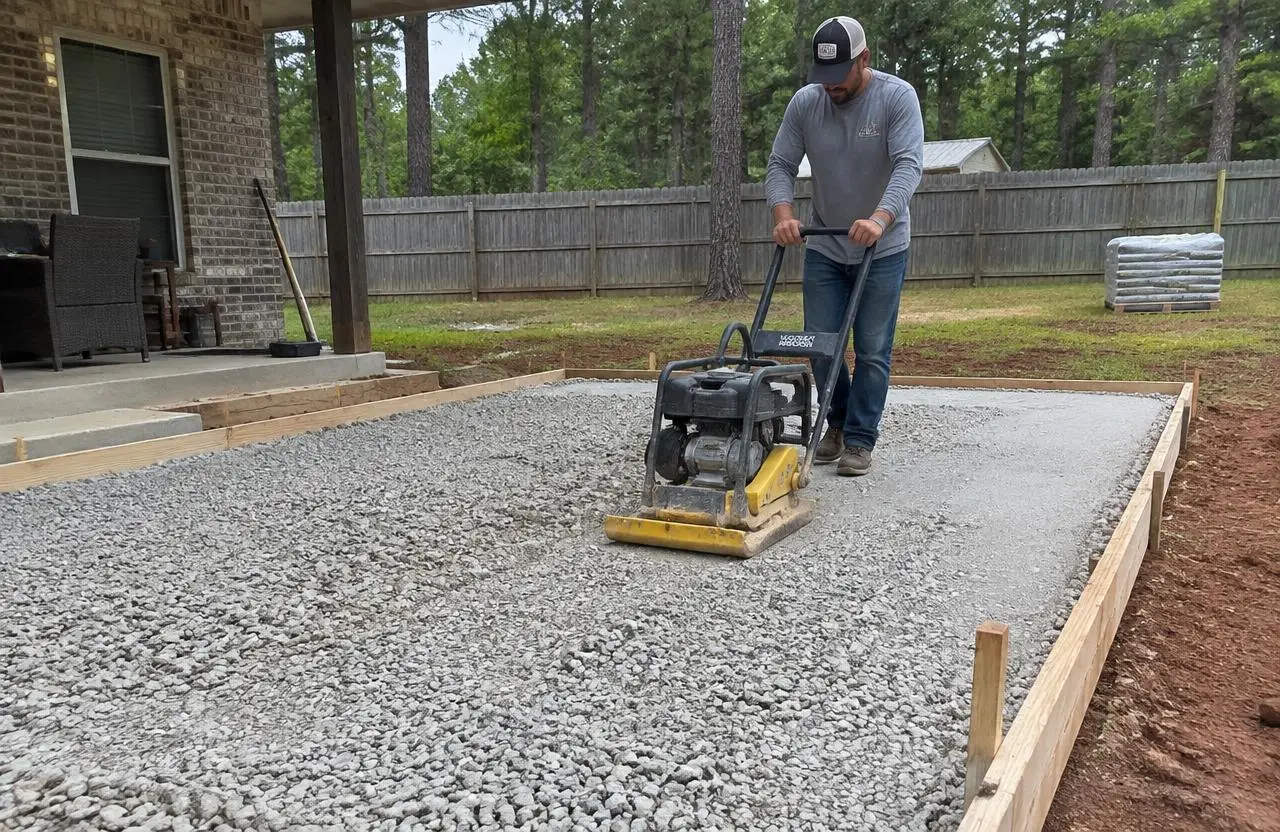
A new slab changes where rain goes. Water that once soaked into grass may run toward a doorway, across a walk, or into a low corner. Good concrete planning starts with that route. Surface finish matters, but it cannot correct a slab built at the wrong height or a drain with nowhere to empty.
Follow one drop from the roof to the street
Picture rain leaving a downspout beside your proposed patio. Where does it land? Does it cross the slab, soak the edge, or flow toward the house? Follow it through the entire yard. The final outlet matters as much as the first slope, and runoff must not be shifted onto a neighbor or sent to an unapproved location.
Walk the area during ordinary rain if you can do so safely. Take photos from a sheltered place and mark puddles after the storm. Never enter flooded streets or open a drain during flowing water. These notes help a contractor see patterns that may not show up on a dry estimate day.
Three levels need to work together
- The slab surface needs a planned route for runoff that fits the intended use.
- The base and soil beneath it need suitable support without hidden soft pockets.
- The surrounding yard needs a clear outlet that remains usable after landscaping.
Door thresholds, garage entries, siding clearances, and nearby pavement limit available elevations. A contractor should measure them, not just judge by eye. The right slope depends on the site, finish, accessibility rules, and applicable requirements. A generic slope number is not a substitute for checking whether the whole drainage route works.
For example, a patio may slope away from the house but end at a raised garden bed. Water still stops there. Another slab may drain well on paper until a fence footing blocks its outlet. Planning a concrete patio in Tyler means looking beyond the outline of the new concrete.
Soil movement makes the route important
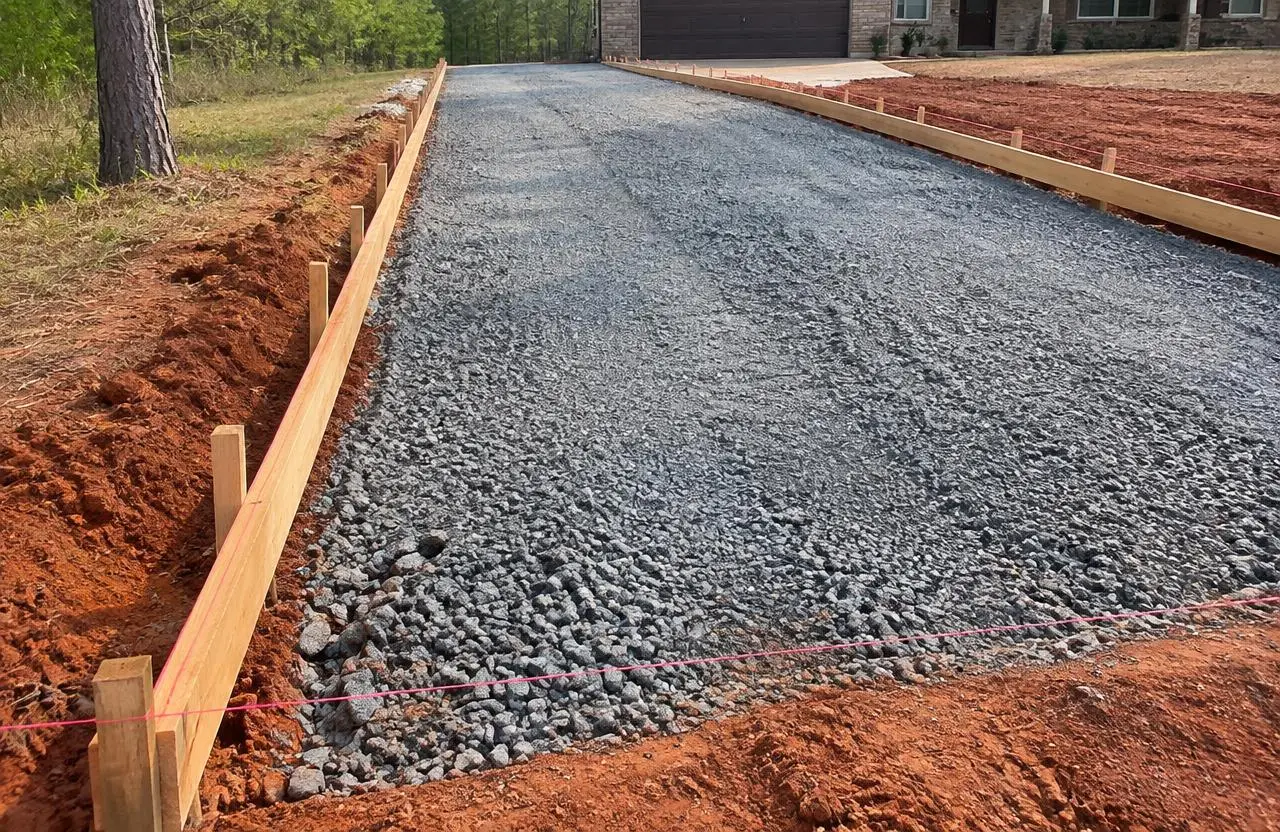
Parts of East Texas have clay soil that swells when wet and shrinks when dry. Other sites have sandier soils or mixed fill. A wet slab edge beside a dry one can mean uneven support. Water can also carry fine soil away, leaving gaps that a thicker top surface alone will not solve.
Base preparation must fit actual ground conditions and expected loads. Neither more gravel nor more reinforcing steel automatically cures a drainage fault. Ask what happens if excavation uncovers soft ground. Our installation process overview explains where grading and compaction belong in the job, before placement and finishing begin.
Match the fix to the source
A surface swale may suit one yard. Another may need changes to downspouts, an approved drain system, or different slab elevations. A drain needs a proper outlet and a way to clean it. Burying a pipe without checking its discharge point can simply move the puddle underground, where it is harder to see.
Permeable landscape areas may help slow runoff when soil and site conditions allow. The EPA’s Soak Up the Rain guidance describes ways to manage rain near where it falls. That guidance is not a design for every yard; nearby foundations, soil behavior, utilities, and local rules still need review.
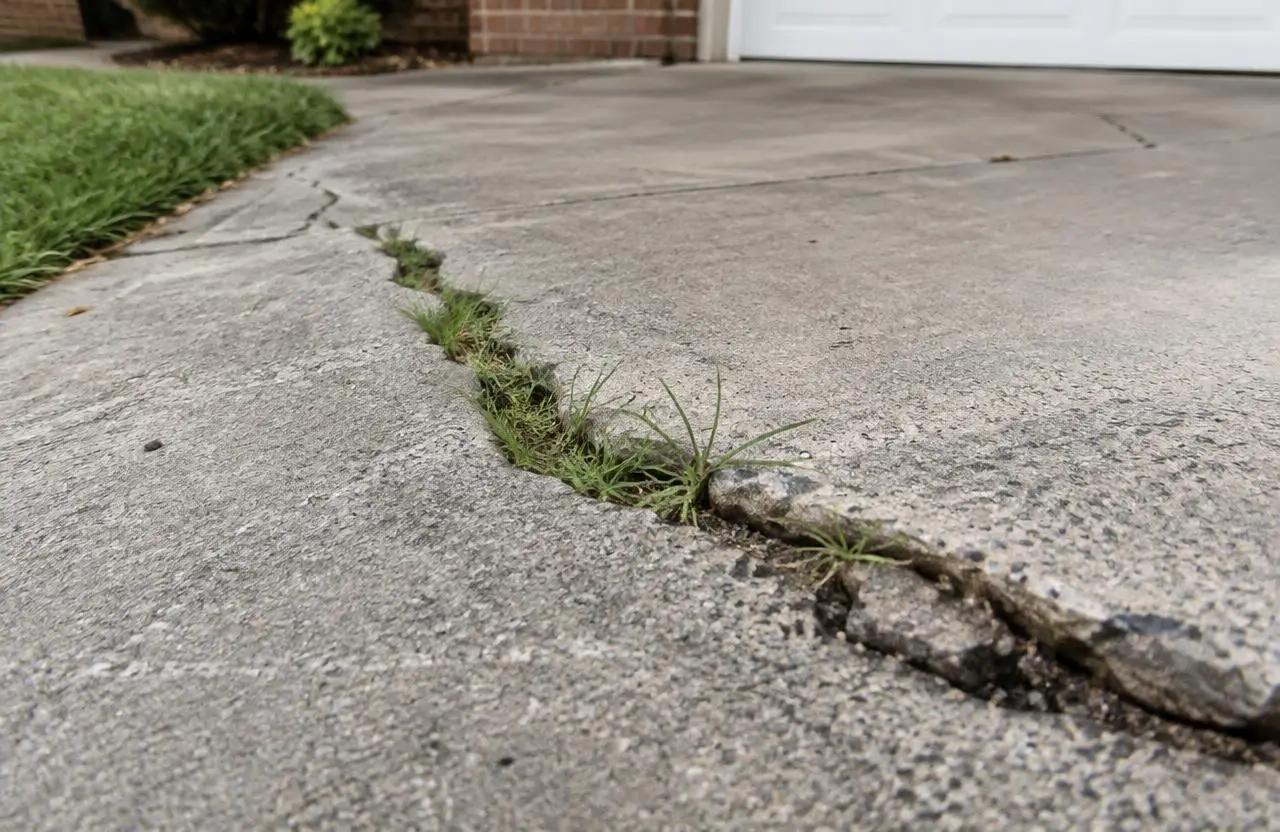
Do not cut a channel into existing concrete as a first guess. It may create a wheel hazard, expose reinforcement, or fail to solve the low point. For older pavement, a repair evaluation should consider whether the slab moved or whether the original layout never provided a workable outlet.
Put drainage details into the estimate
- Ask which elevations will be checked and how runoff will leave the work area.
- Identify who handles downspouts, drains, permits, and utility coordination.
- Request a clear allowance or change process for unsuitable soil.
- Confirm how final soil grades and disturbed landscaping will be left.
A drawing with arrows can be more useful than a vague promise of “proper drainage.” Read what belongs in a concrete estimate before comparing bids. For access and yard preparation, use the property preparation article to decide what you can clear and what the crew needs to handle.
Keep the outlet open after the job
Mulch, leaves, lawn edging, and new soil can undo a good drainage plan. Check outlets after storms and keep drain grates clear from a safe position. Its easy to overlook a blocked corner when the rest of the patio looks dry. Report new settling or ponding before treating it as a simple cleaning problem.
If a future slab sits near a doorway or a known wet spot, schedule a site estimate before choosing its size. Tyler Solid Concrete can discuss the visible site conditions and proposed work. Ask for any needed drainage or design review to be included in the scope, rather than assumed to be part of a basic pour.
Sources
Related concrete services
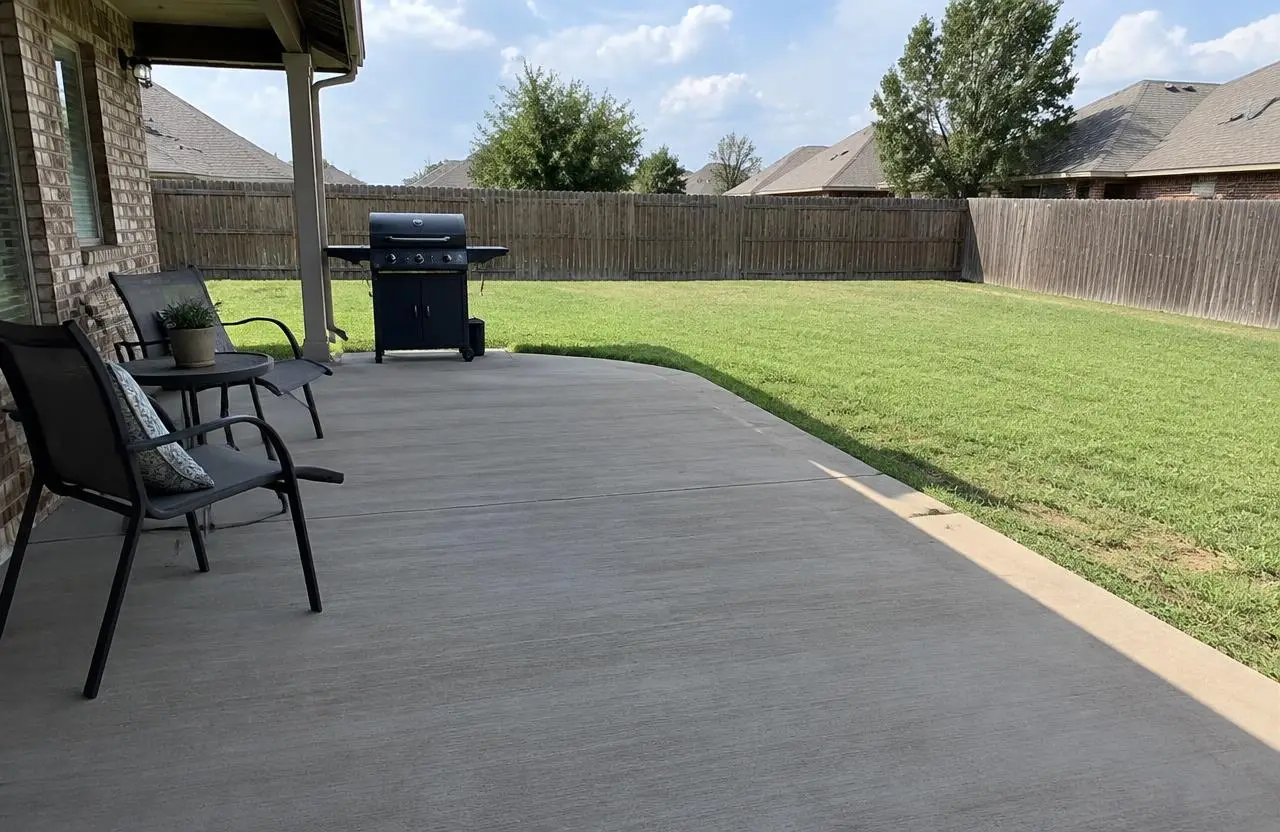 Concrete PatiosConcrete patios for East Texas back yards: layout, finishes, drainage and covered spaces. Talk to Tyler Solid Concrete for a free on-site estimate.
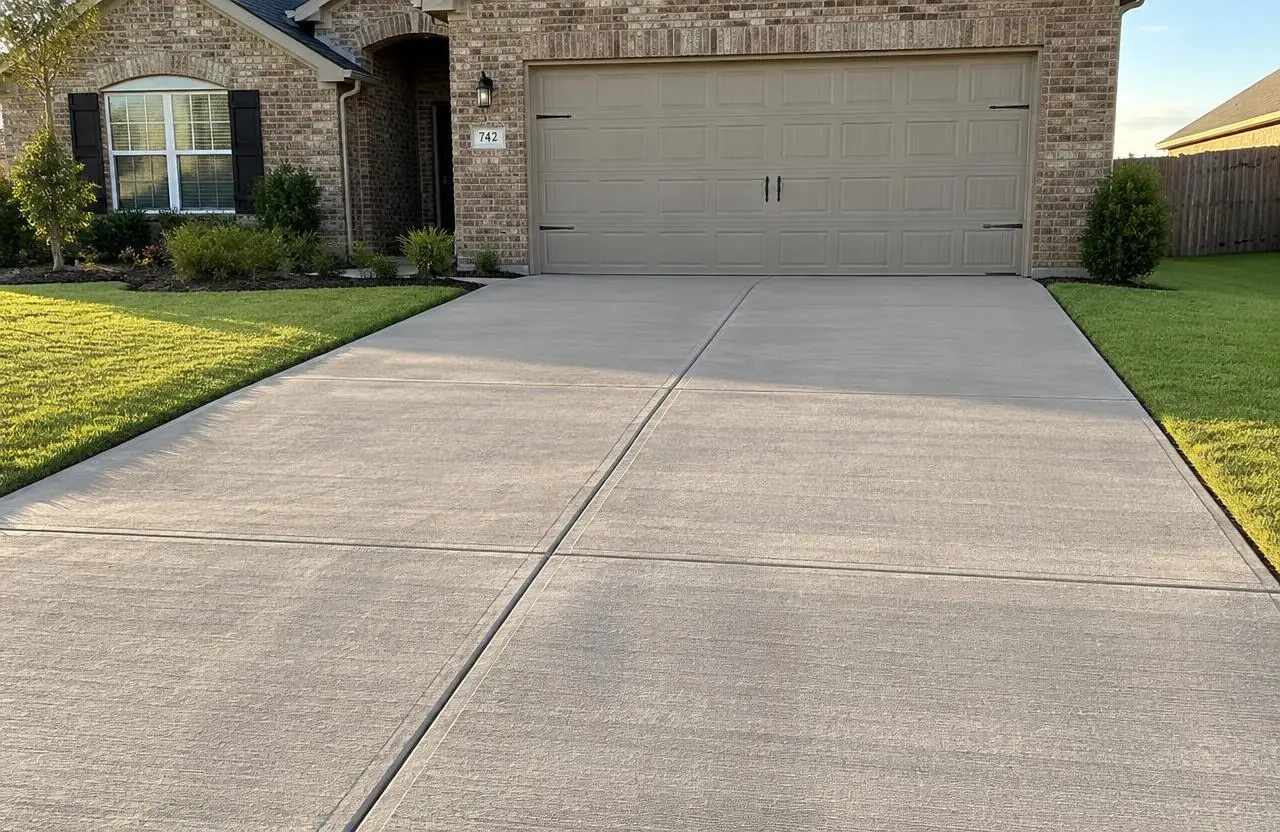 Concrete DrivewaysNew concrete driveways, widening and extensions in Tyler, TX. Proper base prep, drainage, finishing and curing. Schedule a free on-site estimate.
 Concrete RepairExplore concrete repair options in Tyler, TX, from surface damage to cracks. Learn when repairs make sense and when replacement deserves a closer look.
Keep reading
- What to Include in a Concrete Project Estimate
Two concrete estimates can name the same square footage and still describe very different jobs. One may include removal, base repairs, and final cleanup. The other may cover only placing concrete on a ready site. A useful estimate turns the conversation into a written scope, so you can compare the work rather than just the bottom line.
- How to Prepare Your Property for Concrete Installation
Good preparation starts before the crew unloads a tool. Your main job is to clear the way, share useful site details, and keep people out of the work zone. The contractor handles construction tasks within the agreed scope. Knowing that boundary can prevent delays and keep a simple weekend cleanup from creating extra work.
- Concrete Installation Process
Ready to talk about your concrete project?
Free on-site estimates in Tyler and nearby East Texas towns.