
Concrete Patio Ideas for East Texas Homes
By the Tyler Solid Concrete team · Published · Driveways and Patios
The best patio idea starts with how you want to spend time outside. A shady place for morning coffee needs a different layout than a weekend dining space. In East Texas, summer heat and heavy rain belong in that choice too. Start with comfort, walking room, and water flow before choosing a pattern or color.
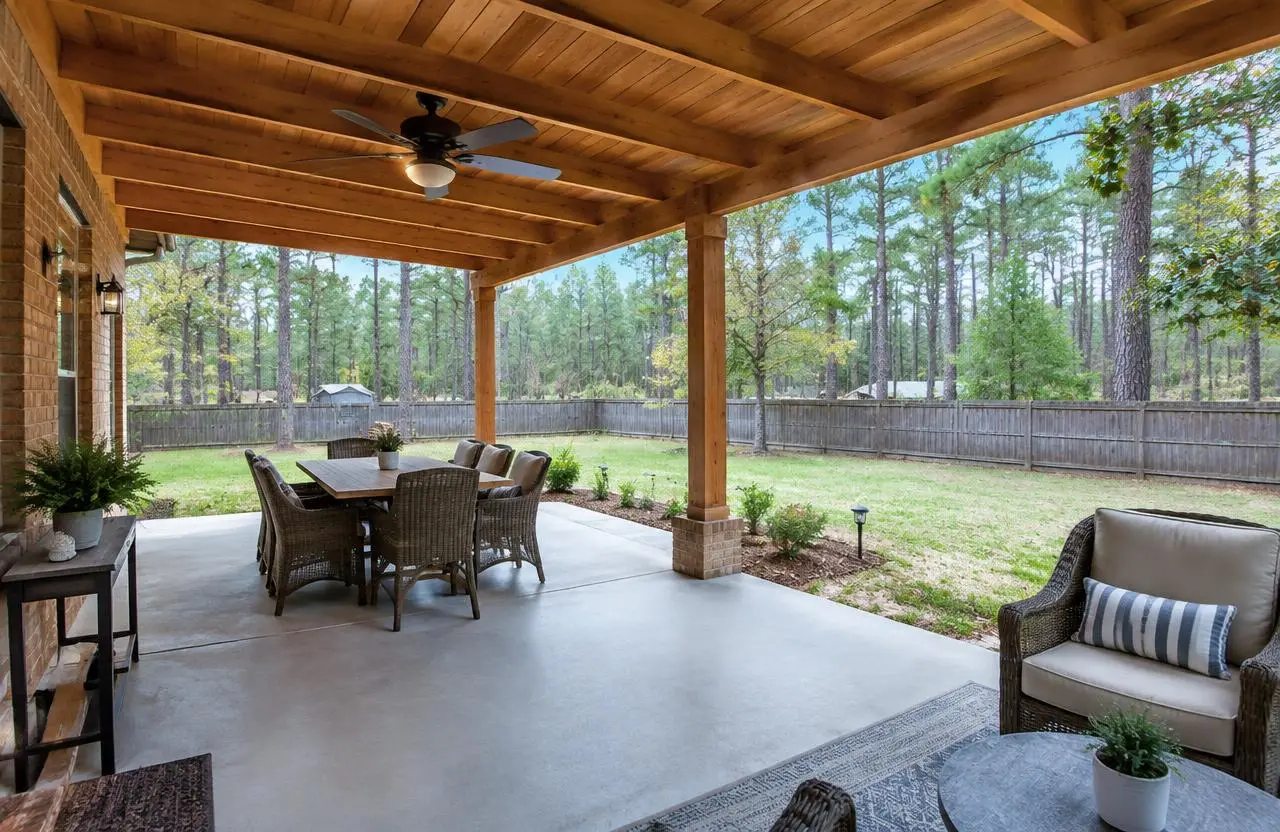
The best patio idea starts with how you want to spend time outside. A shady place for morning coffee needs a different layout than a weekend dining space. In East Texas, summer heat and heavy rain belong in that choice too. Start with comfort, walking room, and water flow before choosing a pattern or color.
Idea one: a simple dining patio that fits real chairs
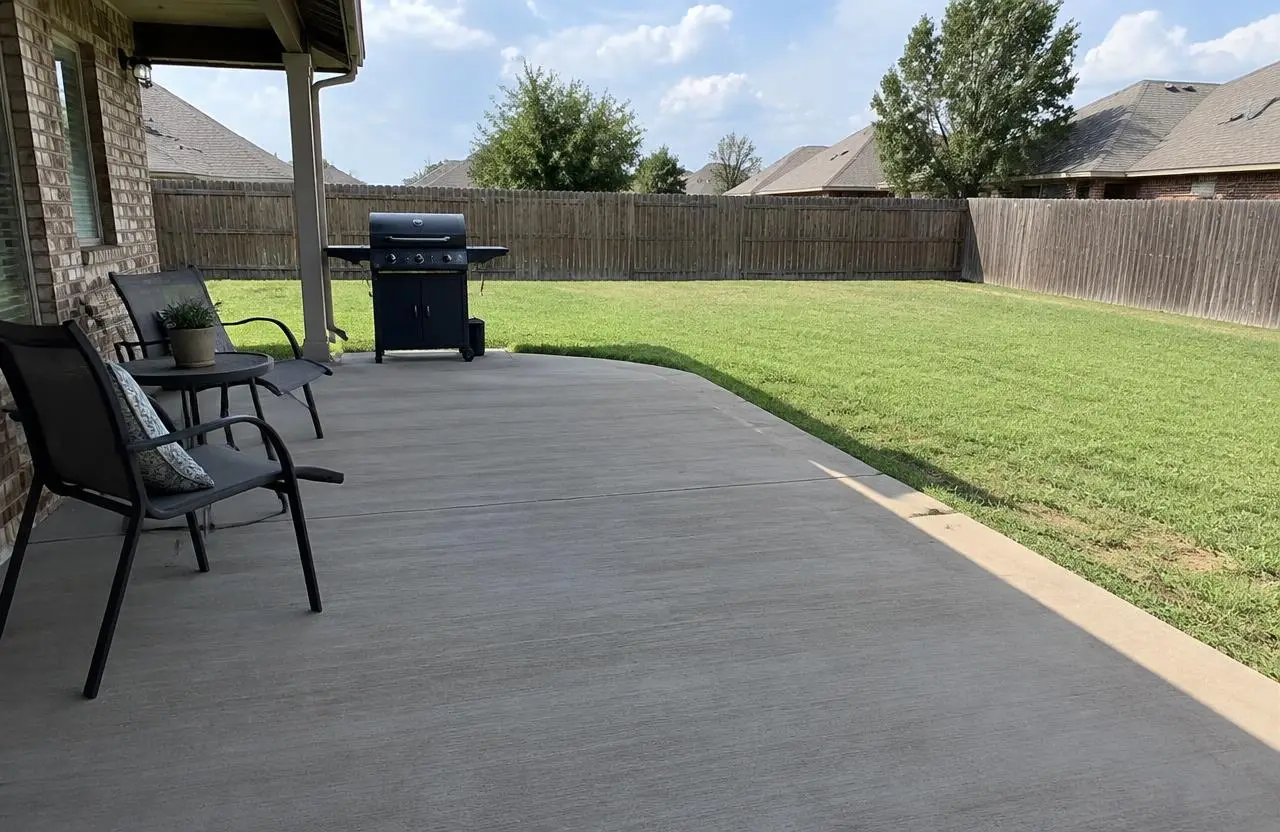
A plain rectangle can be one of the most useful patio shapes. Set out your table and chairs on the lawn, then pull the chairs back as if people were sitting down. Mark a clear path around them. This quick test shows whether a drawing has enough usable space without relying on a standard patio size.
Place the route from the house where people can carry plates without weaving between chairs. Keep grills at the clearances required by their maker and away from doors or combustible materials. A broom finish can provide texture underfoot, though no outdoor surface is slip-proof. Ask to see samples of the proposed texture.
Idea two: a shaded sitting area with room to grow
A small lounge zone beside existing shade may feel cooler than a much larger slab in full afternoon sun. Watch the yard at different times of day before fixing the location. Trees also bring roots, leaves, and maintenance. Avoid placing concrete around major roots without advice on both the tree and the slab.
If a roof or patio cover might come later, discuss it now. A walking slab is not automatically a foundation for posts. Footings, anchorage, permits, and engineering may be needed depending on the structure. Planning those details early is easier than cutting into a finished patio after the furniture arrives.
Idea three: keep the pattern at the edges
A textured field with a decorative border can define the patio without covering every inch in a busy pattern. You might use a subtle color change or a stamped edge to frame a dining area. Ask how the border affects joint layout, labor, sealing, and future touch-ups before treating it as a small extra.
Explore stamped concrete options if you like the look of stone or tile. Patterns and colors should be judged from real samples when possible. Sunlight, wetness, texture, and sealer can change how a color looks. An online photo is a starting idea, not an exact finish promise.
Idea four: connect smaller outdoor zones
Some yards work better with a main seating slab and a clear walkway than one large paved area. A path can connect the back door to a dining spot while leaving planting space between zones. Check that the route remains useful when chairs are out, a gate is open, or someone carries a garden cart.
Keep changes in height obvious and properly designed. Steps, landings, and accessible routes may have requirements that affect the layout. Do not create a narrow leftover strip that collects mud between the patio and a fence. Leave enough room for maintenance and a planned route for runoff.
Make drainage part of every design
A patio should not become a shallow basin beside the house. The contractor needs to check finished elevations, nearby thresholds, roof runoff, and where water can safely go. Adding a drain without a suitable outlet does not solve the whole problem. Neither does sending your water toward a neighboring property.
East Texas soils vary, and some clay soils move as moisture changes. Preparation, support, slab thickness, reinforcement, and joints must suit the site, loads, design, and code. The NRMCA Concrete in Practice library includes plain-language resources on joints, cracking, and subgrades that can help you follow those discussions.
Read our article on why concrete drainage matters before finalizing the shape. A curved edge may look nice on paper but still need room for grading. Ask whether nearby downspouts need a separate plan so roof water does not repeatedly soak the patio edge.
Choose the upkeep you will actually do
Leaves, soil, grill spills, and wet shade all affect outdoor surfaces. Sweep regularly and clean spills with a method suited to the finish. Decorative surfaces may need periodic sealing, but the product and timing depend on the system and exposure. More sealer is not always better and can make some surfaces slick.
Use the stamped concrete maintenance tips to compare care needs before choosing a finish. Its easier to enjoy a patio when the upkeep fits your routine. Keep planting beds from burying slab edges, and report new ponding or movement instead of assuming every surface stain is the same problem.
Turn your favorite idea into a measured plan
Pick one main use, one finish direction, and a rough furniture layout. Then compare patio installation choices and patio cost factors. Simple shapes can still feel inviting when the shade, furniture, and walking routes work together. Decorative details should support the space rather than make it harder to use.
Bring your sketch and a few reference photos when you schedule a free estimate. Include future cover plans, drainage concerns, and access limits. A site visit can turn a favorite idea into a practical layout without guessing about the ground or promising a fixed price from a picture.
Sources
Related concrete services
- Concrete PatiosConcrete patios for East Texas back yards: layout, finishes, drainage and covered spaces. Talk to Tyler Solid Concrete for a free on-site estimate.
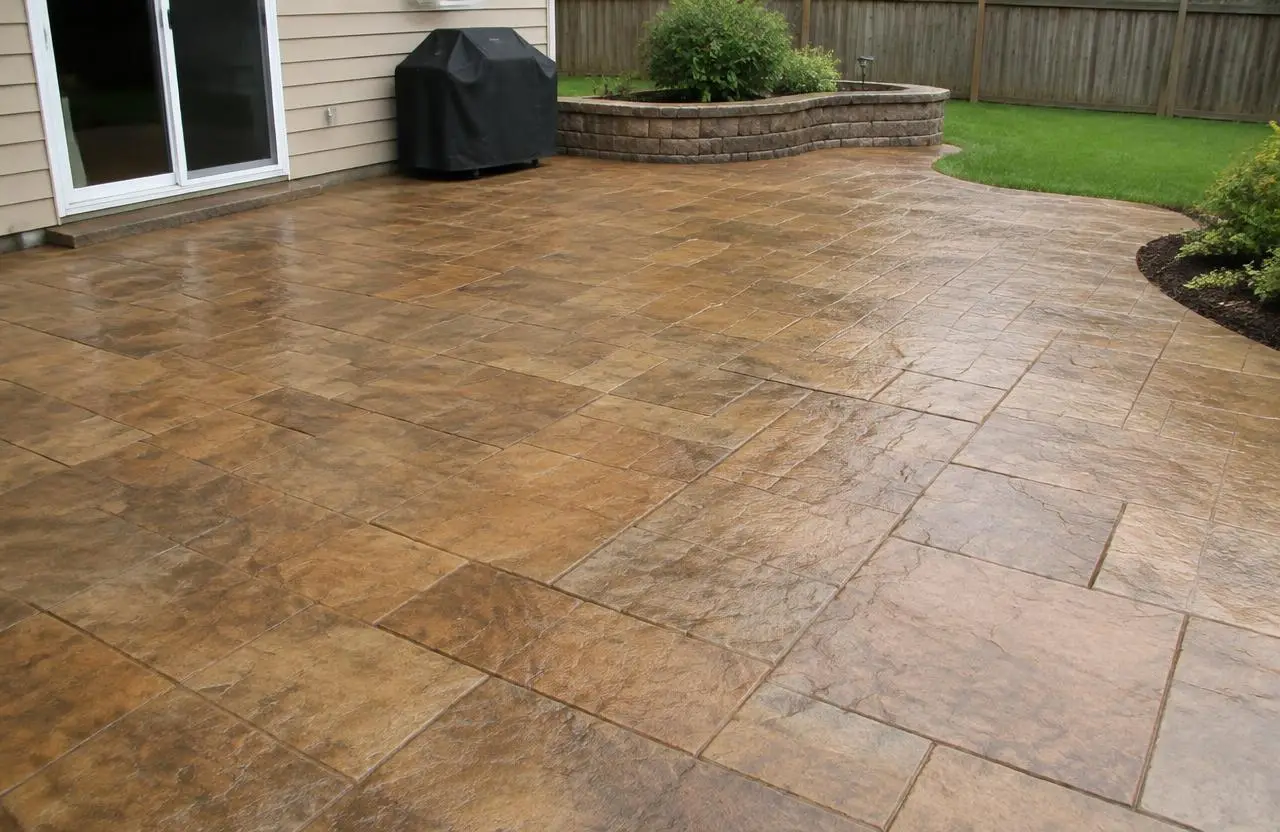 Stamped ConcreteStamped concrete patios, drives and walks in Tyler, TX. Pick patterns, textures and colors, plus sealing and care. Get a free on-site estimate.
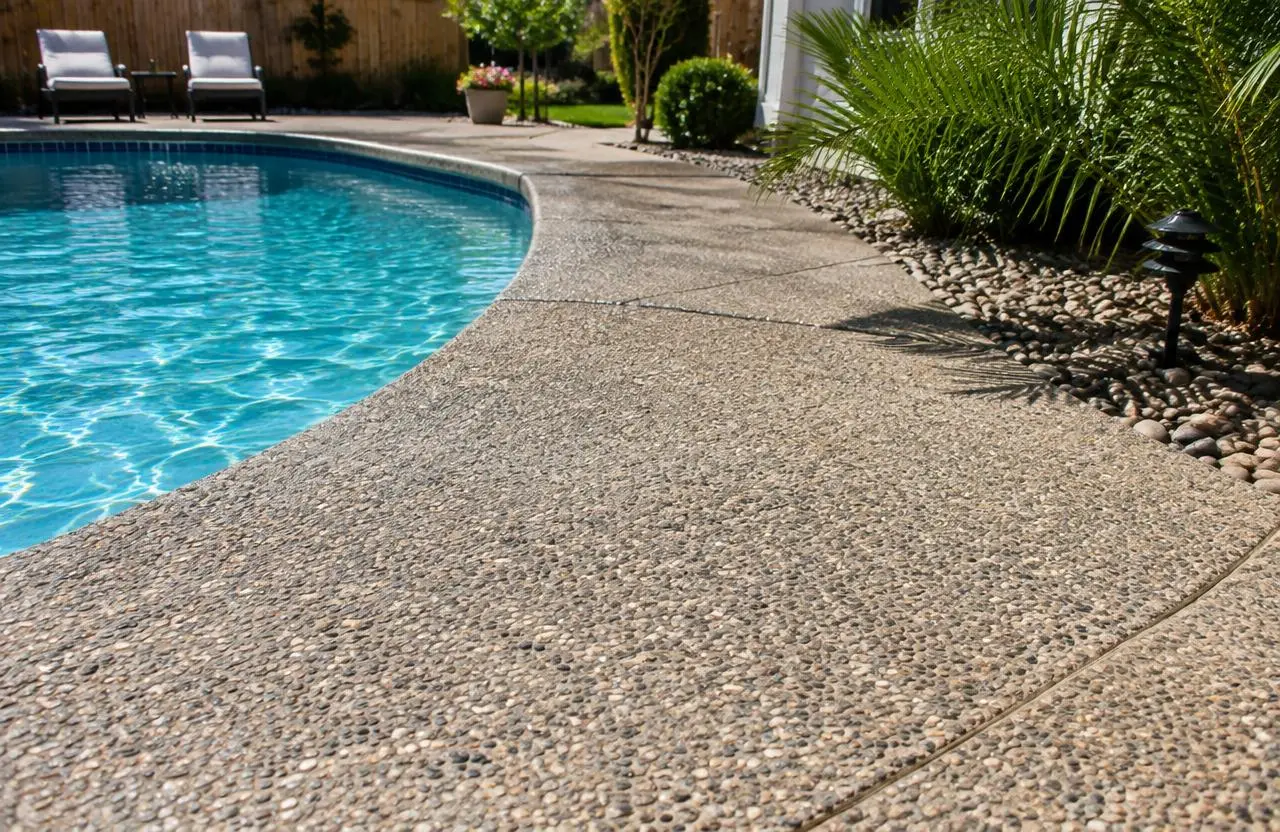 Decorative ConcreteDecorative concrete in Tyler, TX: exposed aggregate, stains, color, saw-cut designs and borders. Plain slabs with style. Request a free estimate.
Keep reading
- Why Concrete Drainage and Grading Matter
A new slab changes where rain goes. Water that once soaked into grass may run toward a doorway, across a walk, or into a low corner. Good concrete planning starts with that route. Surface finish matters, but it cannot correct a slab built at the wrong height or a drain with nowhere to empty.
- Stamped Concrete Maintenance Tips for Tyler Homes
Stamped concrete needs care, but it should not take over your weekends. The goal is to protect the colored surface without building up layers of cleaner or sealer. In Tyler, shaded patios may stay damp after rain while sunny edges dry quickly. Treat those areas by what you see, not by one fixed calendar.
- Concrete Patio Cost
- How to Maintain a Concrete Driveway
A simple routine helps you spot water problems, surface wear, and moving cracks before you choose a repair that may not fit.
Ready to talk about your concrete project?
Free on-site estimates in Tyler and nearby East Texas towns.